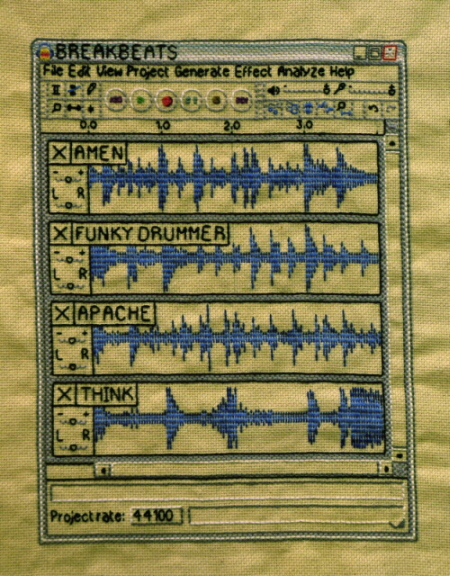
Here is a needlework sampler I’ve made based on the tradition of needlework samplers and the processes used by producers to create contemporary musical compositions.
For those who might not be familiar with what a needlework sampler is, here is the definition from Wikipedia: A (needlework) sampler is a piece of embroidery produced as a demonstration or test of skill in needlework. It often includes the alphabet, figures, motifs, decorative borders and sometimes the name of the person who embroidered it and the date. The word sampler is derived from the Latin ‘exemplum’ – an example.
And here’s how Wikipedia says needlework samplers originated: The oldest surviving samplers were constructed in the 15th and 16th centuries. As there were no pre-printed patterns available for needleworkers, a stitched model was needed. Whenever a needlewoman saw a new and interesting example of a stitching pattern, she would quickly sew a small sample of it onto a piece of cloth – her ’sampler’. The patterns were sewn randomly onto the fabric as a reference for future use, and the woman would collect extra stitches and patterns throughout her lifetime.
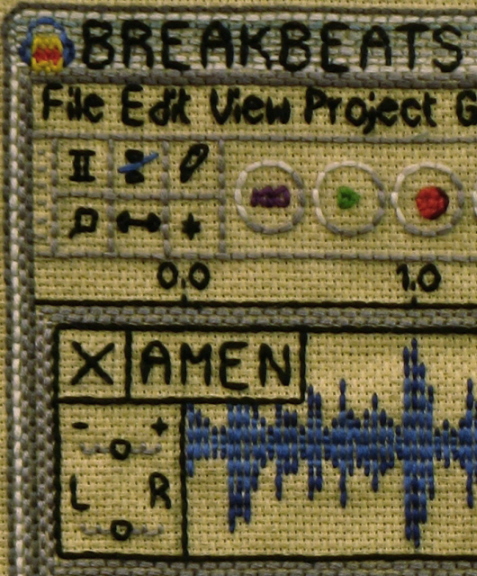
It occurred to me that needleworkers used to have to make patterns and images to decorate fabric in the same way that contemporary music producers make beats and musical compositions by repeating and layering audio samples in digital sound editing programs. So the files created using digital editing programs today basically function in the same way that needlework samplers did in the days when all embroidery had to be done by hand.
(more…)